- Home
- Damage Guides
- Is That Musty Smell Mold? How to Track It Down
Is That Musty Smell Mold? How to Track It Down
A musty smell is your house telling you something is staying wet. Before you buy a candle, track down where it is coming from.
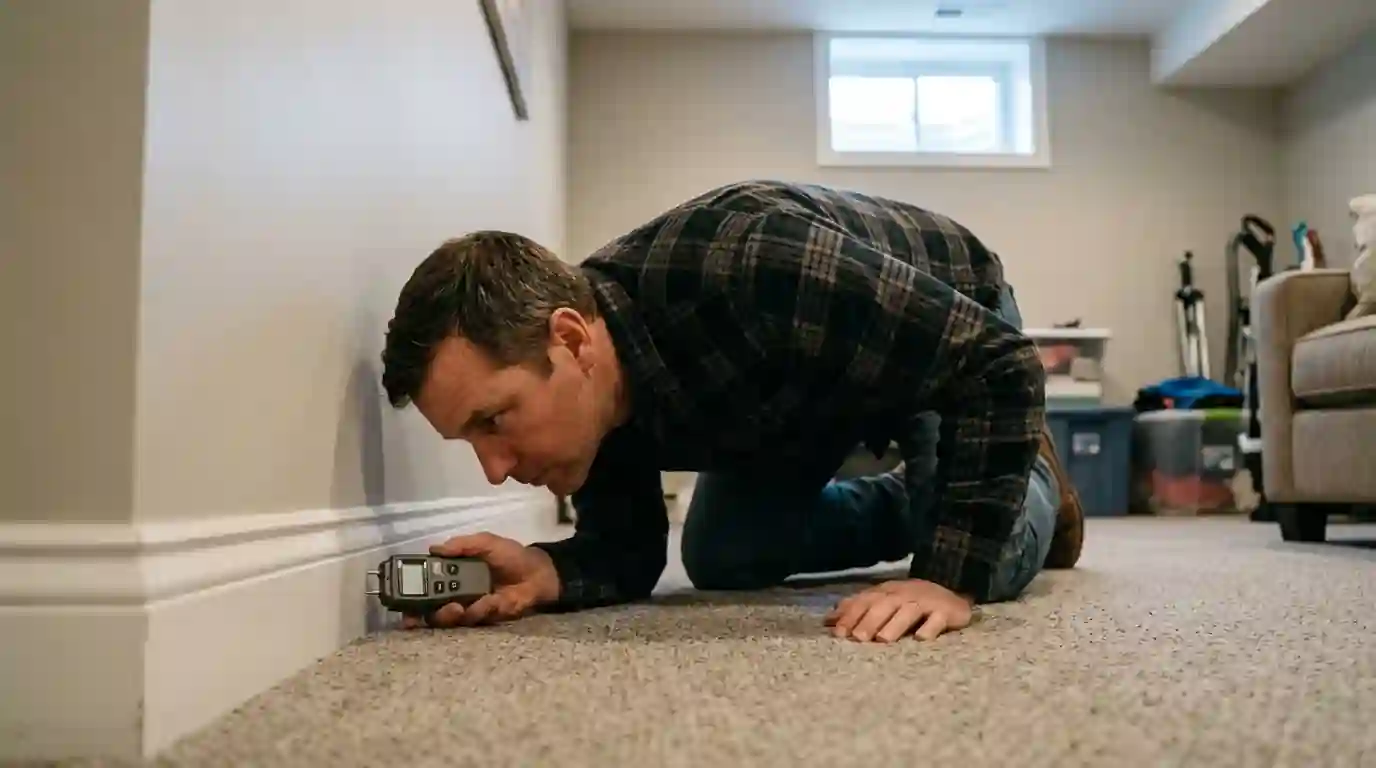
Follow your nose, room by room
Musty odor is strongest close to its source. Walk the house with doors closed for an hour first, then open each room and notice where the smell is strongest. Closets on outside walls, basements, bathrooms and the floor near the crawlspace hatch are the usual suspects.
Look where water collects
Check under sinks, behind the washing machine and toilet, around the water heater and along the bottom of basement walls. Look at window sills for condensation and black spots. In the attic, look at the underside of the roof deck on the north side.
When the source is hidden
Mold inside walls or under flooring will not show on the surface. A moisture meter, a thermal camera or a small inspection hole can confirm it. Air testing can show whether indoor spore levels are higher than outdoors, which helps when the source is hidden.
Fix the moisture, not just the mold
Cleaning a moldy spot without fixing the leak, the humidity or the ventilation means it will come back. A bathroom fan ducted outside, a dehumidifier in a basement and a vapor barrier in the crawlspace solve most of the musty smells we find.
Checklist
- Smell each room after closing it up
- Check sinks, appliances and the water heater
- Look at sills, closets and basement walls
- Use a meter or inspection for hidden spots
- Fix the moisture source
Related services
Mold Inspection
A visual and moisture-meter inspection to find mold and the water feeding it.
See mold inspectionMold Testing
Air and surface samples sent to a lab when you need numbers.
See mold testingBasement Mold Removal
Mold on basement walls, carpet and framing removed and kept from returning.
See basement mold removal