- Home
- Restoration
- Water Damage Restoration
Water Damage Restoration in Seattle, WA
Whole-job water damage service: stop the source, extract, dry, document and rebuild.
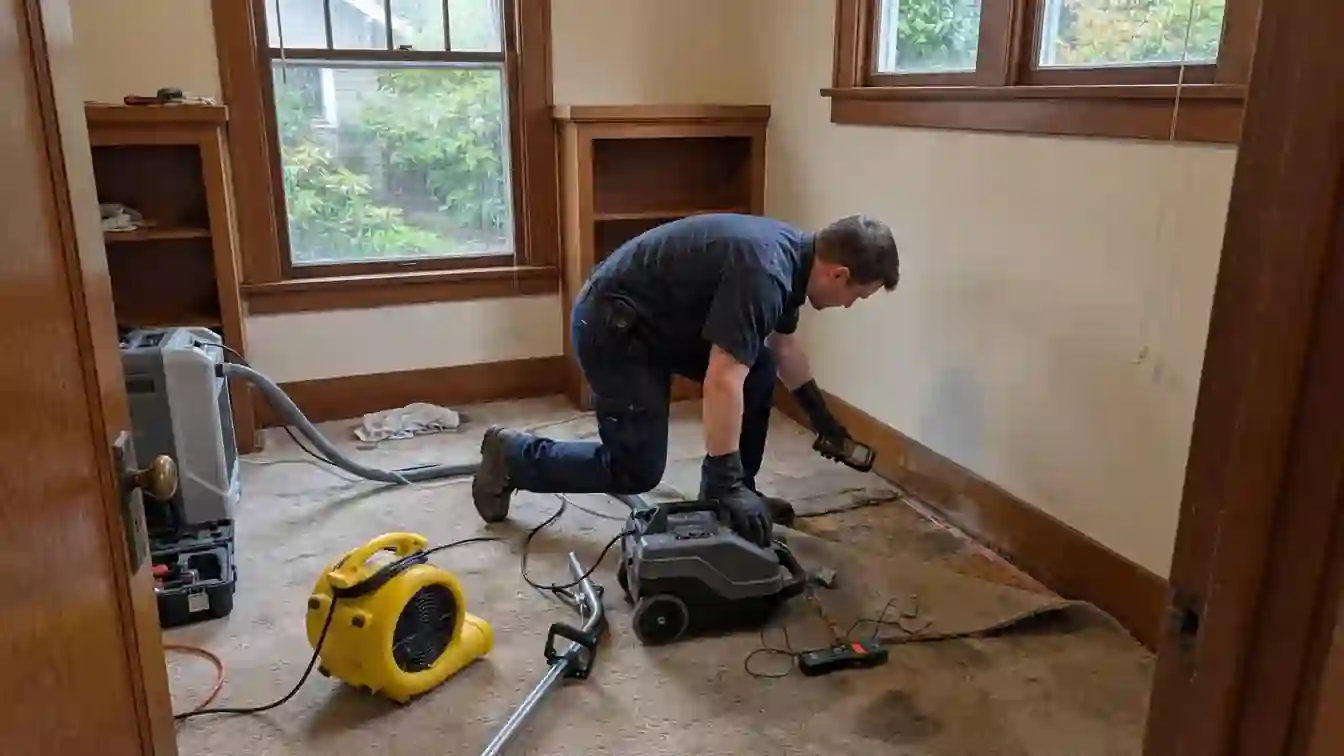
Water damage restoration is the full job, start to finish: we find and stop the source, pull out standing water, dry the structure to a measured goal and then repair what had to come out.
Water damage restoration is the full job, start to finish: we find and stop the source, pull out standing water, dry the structure to a measured goal and then repair what had to come out. One crew, one phone number, one file for your insurer.
Clean water from a supply line becomes a bigger problem every hour it sits. It wicks up drywall about an inch an hour for the first several hours, and once it reaches the wall cavity it stays there until someone dries it on purpose.
Signs you need water damage restoration
- Water on a floor that should be dry, or carpet that squishes underfoot
- Paint bubbling or baseboards swelling along a wall
- A ceiling stain that grows after rain or after a shower upstairs
- A musty smell that shows up a day or two after a leak
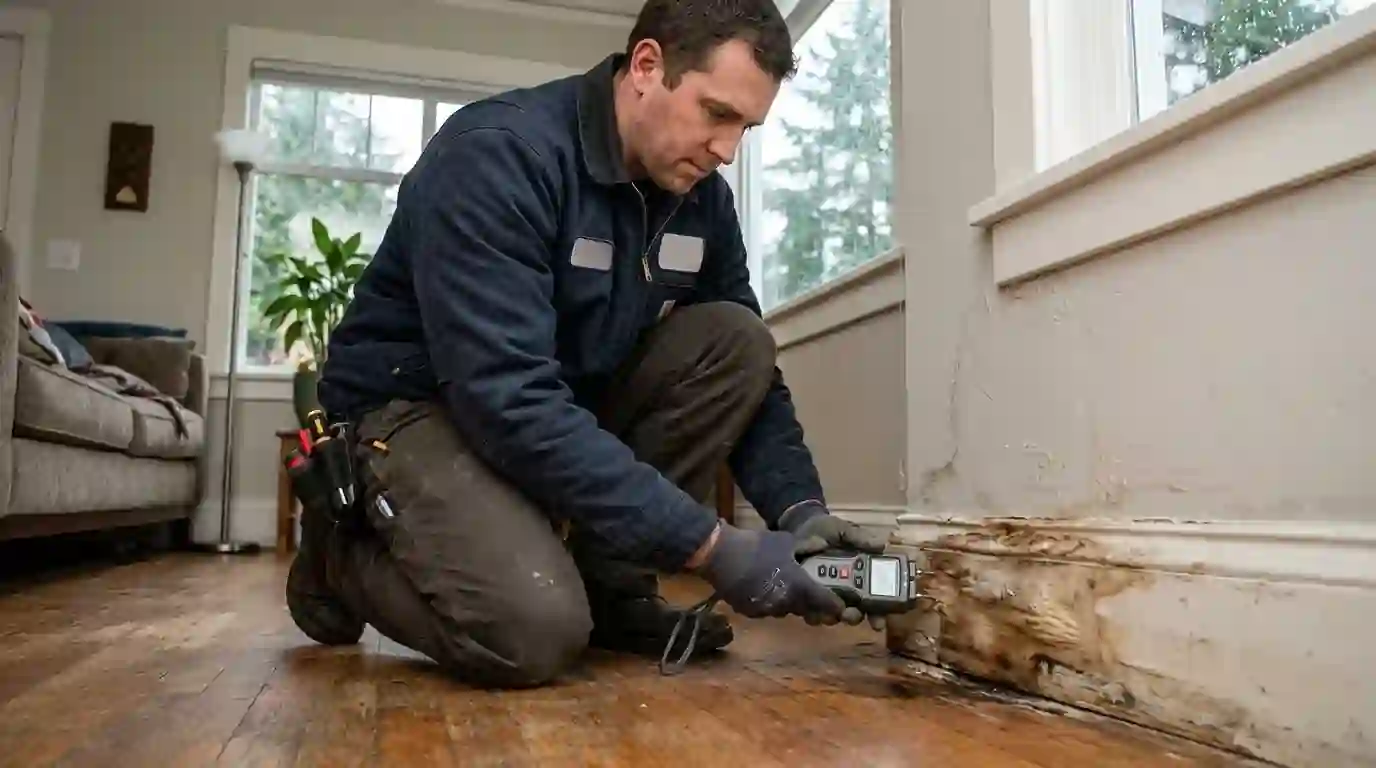
What our crew does
- Shut off the source and make the electrical side safe
- Extract standing water with truck-mounted and portable units
- Map moisture in walls, subfloor and framing with meters
- Set air movers and dehumidifiers, then log readings daily
- Remove what cannot dry, then rebuild walls, floors and trim
Most water losses we see in Seattle are not dramatic. They are a supply line, a seal or a valve that let go quietly. The damage is in the places nobody looks: under the pad, inside the bottom plate and in the subfloor.
Water Damage Restoration in Seattle homes
Seattle homes built before 1960 often have plaster walls and old-growth fir floors. Both dry well when they are caught early, so we treat them as keepers instead of tearing them out by habit.
We take these calls across the city and the region, from Ballard, Queen Anne, Capitol Hill, Bellevue, Shoreline and beyond. See the full list of Puget Sound areas we serve.
Questions about water damage restoration
How fast should water damage be dried out?
Drying should start within 24 to 48 hours. After that, mold can begin growing on wet drywall and wood, and the job gets bigger.
Will my homeowners policy cover water damage restoration?
Most policies cover sudden water, such as a burst supply line, and exclude slow leaks and outside flooding. We photograph and log everything so your adjuster can see what happened.
Do I have to move out during water damage restoration?
Usually not. Most families stay home while drying equipment runs, though bedrooms with equipment can be loud for a few days.
Services that often go with this one
Emergency Water Extraction
Standing water pumped and vacuumed out fast, day or night, before it wicks into walls.
See emergency water extractionStructural Drying
Walls, subfloors and framing dried with metered goals, not guesswork.
See structural dryingWater Damage Repair
Walls, floors, trim and paint put back after drying, by the same crew.
See water damage repairBurst Pipe Water Damage
Cleanup after a split supply line or frozen pipe, from extraction to repair.
See burst pipe water damageFlooded Basement Cleanup
Basements pumped, cleaned, dried and checked for the reason water came in.
See flooded basement cleanupCeiling Leak Water Damage
Sagging or stained ceilings opened safely, dried and rebuilt.
See ceiling leak water damage