- Home
- Restoration
- Structural Drying
Structural Drying in Seattle, WA
Walls, subfloors and framing dried with metered goals, not guesswork.
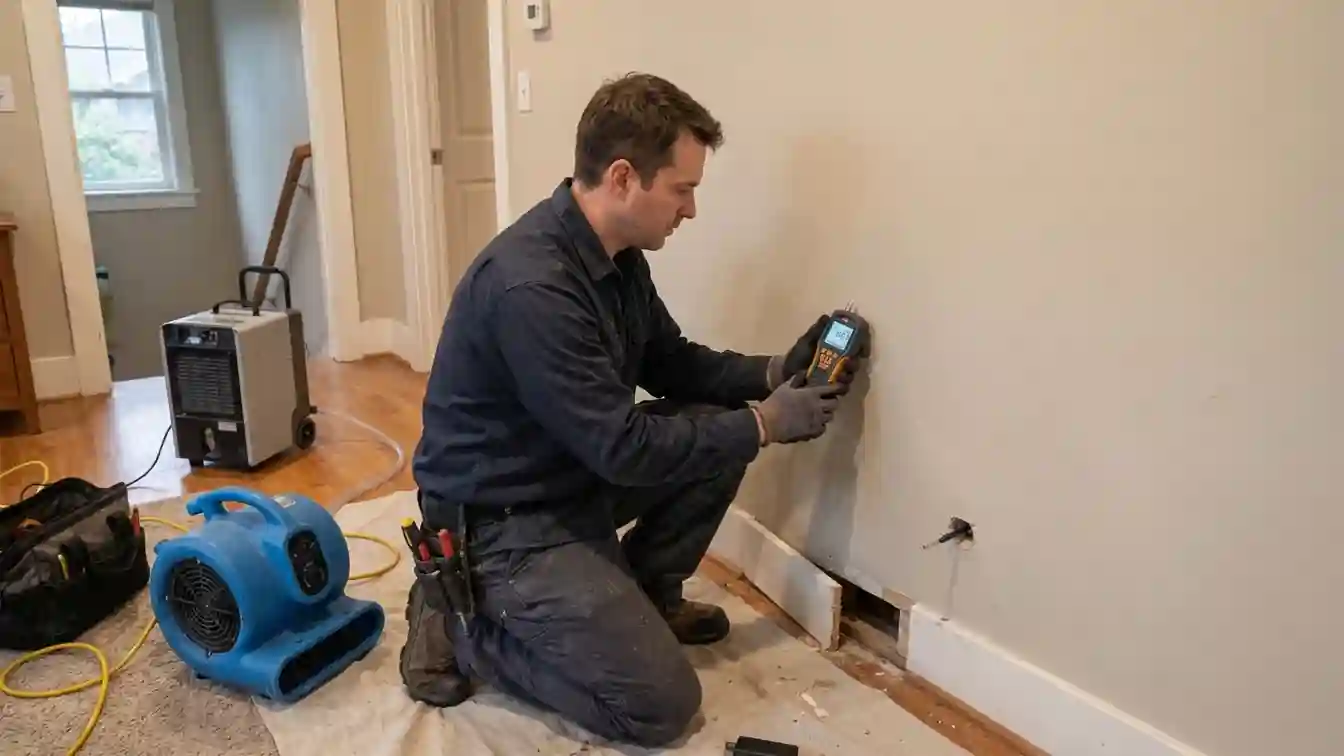
Structural drying is the part of the job most people never see.
Structural drying is the part of the job most people never see. Water soaks into studs, sill plates and subfloor, and it has to come back out before anything is closed up. We dry to the readings of unaffected wood in your own house, then prove it with a log.
Drying is a measured process. We set goals from dry rooms in your own house and read the same points every day, so the equipment comes out when the numbers say so, not when the surface looks fine.
Signs you need structural drying
- Drywall that reads wet on a meter after the surface looks dry
- Hardwood cupping or lifting at the seams
- Subfloor that feels soft near a toilet or tub
- A wet crawlspace under the area that leaked
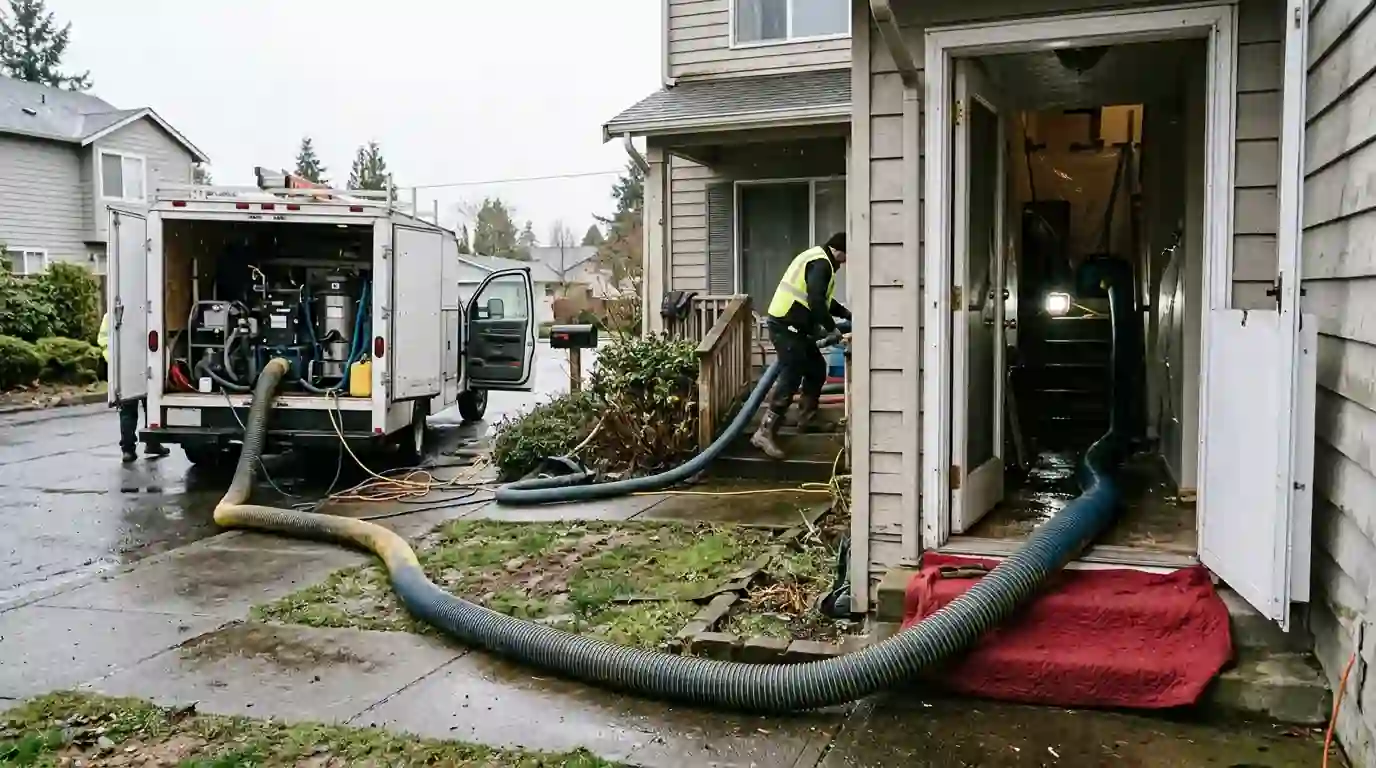
What our crew does
- Take dry-standard readings from unaffected rooms
- Open cavities with small holes or flood cuts where needed
- Set air movers in a pattern and low-grain dehumidifiers
- Read the same points every day and adjust equipment
- Pull equipment only when every point hits its goal
Clean water from a supply line becomes a bigger problem every hour it sits. It wicks up drywall about an inch an hour for the first several hours, and once it reaches the wall cavity it stays there until someone dries it on purpose.
Structural Drying in Seattle homes
Puget Sound air holds a lot of moisture in winter, so an open window does not dry a house here. Closed-room drying with dehumidifiers is how wood gets back to normal in November.
We take these calls across the city and the region, from Capitol Hill, Bellevue, Shoreline, Renton, Kirkland and beyond. See the full list of Puget Sound areas we serve.
Questions about structural drying
How do you know when structural drying is finished?
Each meter point has to match the reading of the same material in a dry part of the house. We record those numbers daily and share the log.
Why do you drill holes in the wall during structural drying?
Small holes at the base of a wall let dry air into the cavity behind it. They are cheaper to patch than a wall that has to be replaced after mold grows.
Can structural drying save hardwood floors?
Often, yes. Cupped oak or fir can flatten back out with floor drying mats, and it is usually sanded and refinished afterward rather than replaced.
Services that often go with this one
Hardwood Floor Drying
Cupped and wet hardwood dried in place with floor mats before it buckles.
See hardwood floor dryingWater Damage Restoration
Whole-job water damage service: stop the source, extract, dry, document and rebuild.
See water damage restorationDrywall Replacement
Wet or moldy drywall replaced, taped and finished to match.
See drywall replacementEmergency Water Extraction
Standing water pumped and vacuumed out fast, day or night, before it wicks into walls.
See emergency water extractionBurst Pipe Water Damage
Cleanup after a split supply line or frozen pipe, from extraction to repair.
See burst pipe water damageFlooded Basement Cleanup
Basements pumped, cleaned, dried and checked for the reason water came in.
See flooded basement cleanup