- Home
- Damage Guides
- Why Seattle Crawlspaces Get Wet, and What Fixes It
Why Seattle Crawlspaces Get Wet, and What Fixes It
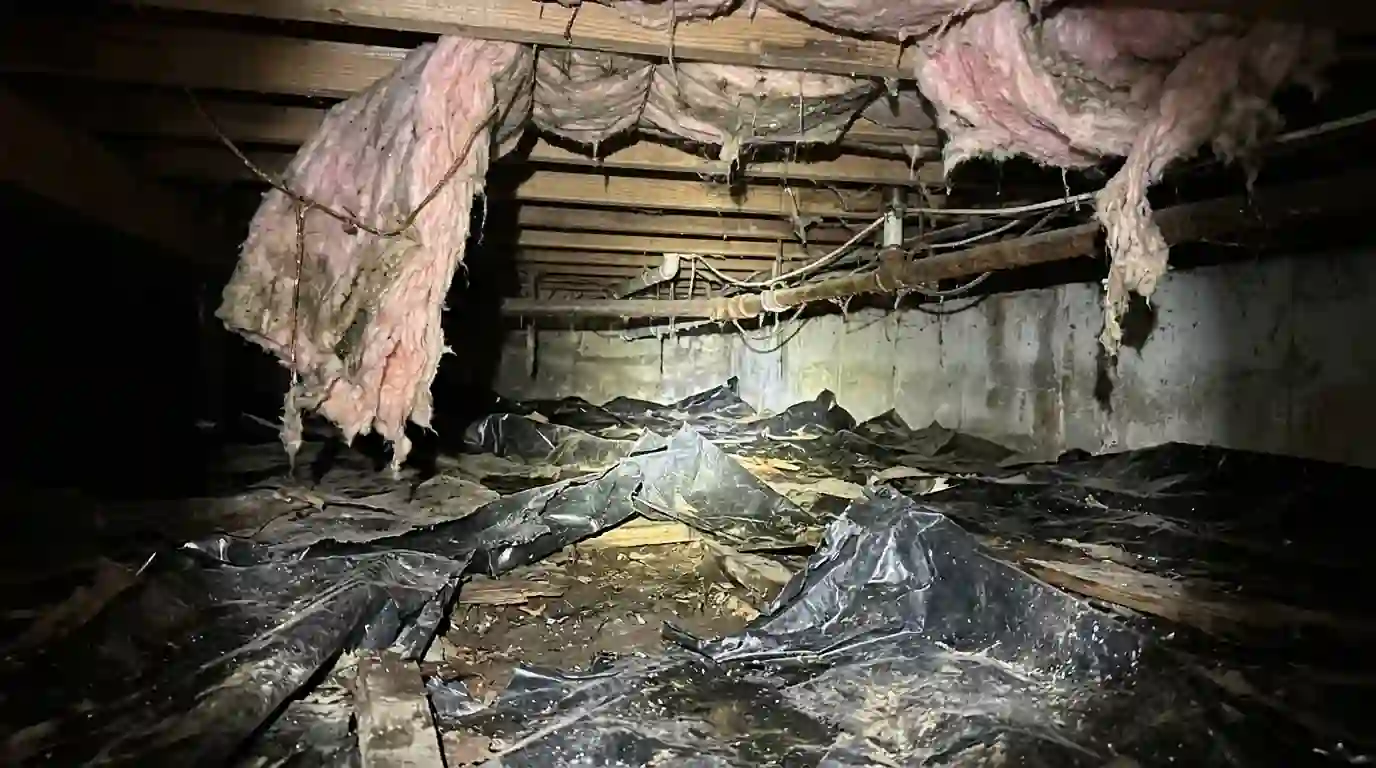
Open a crawlspace hatch in Seattle in February and there is a good chance you will find damp soil, sagging insulation or standing water. Here is why, and what to do about it.
Where the water comes from
Most crawlspace water in Seattle comes from three places: rain that is not carried away from the foundation, groundwater rising through the soil, and plumbing leaks under the house. A downspout that dumps next to the foundation can put more water under a house in one storm than a slow leak does in a month.
The fourth source is the air itself. Outdoor air in winter is cool and wet. When it flows through crawlspace vents and meets cool soil and framing, it adds moisture rather than taking it away.
What a wet crawlspace does to a house
Damp framing grows mold, and over years it can rot sill plates and joists. Wet insulation falls down and stops insulating. Air from the crawlspace moves up into the house, carrying musty smells and moisture into floors and closets.
Fixes, from simplest to biggest
Start outside: clean gutters, extend downspouts at least six feet from the house and slope the soil away from the foundation. Then cover the ground with a heavy vapor barrier, overlapped and sealed at the seams.
If water still collects, a perimeter drain and a sump pump move it out. When a crawlspace stays damp even after drainage is fixed, encapsulation seals the ground and walls and controls the air with a dehumidifier.
Checklist
- Clean gutters and extend downspouts
- Grade soil away from the foundation
- Lay a heavy, sealed vapor barrier
- Add drainage and a sump if water collects
- Encapsulate if damp air persists
Related services
Crawlspace Water Removal
Standing water under the house pumped out and the crawlspace dried.
See crawlspace water removalCrawlspace Mold Remediation
Mold on joists and subfloor cleaned, with the damp crawlspace corrected.
See crawlspace mold remediationCrawlspace Encapsulation
Heavy liners, sealed vents and drying to keep a crawlspace dry for good.
See crawlspace encapsulation